
Step Challenges with Friends
Motion makes step challenges fun and fair. Easy to set up, automatic tracking, balanced goals, and mini-games to keep everyone motivated.
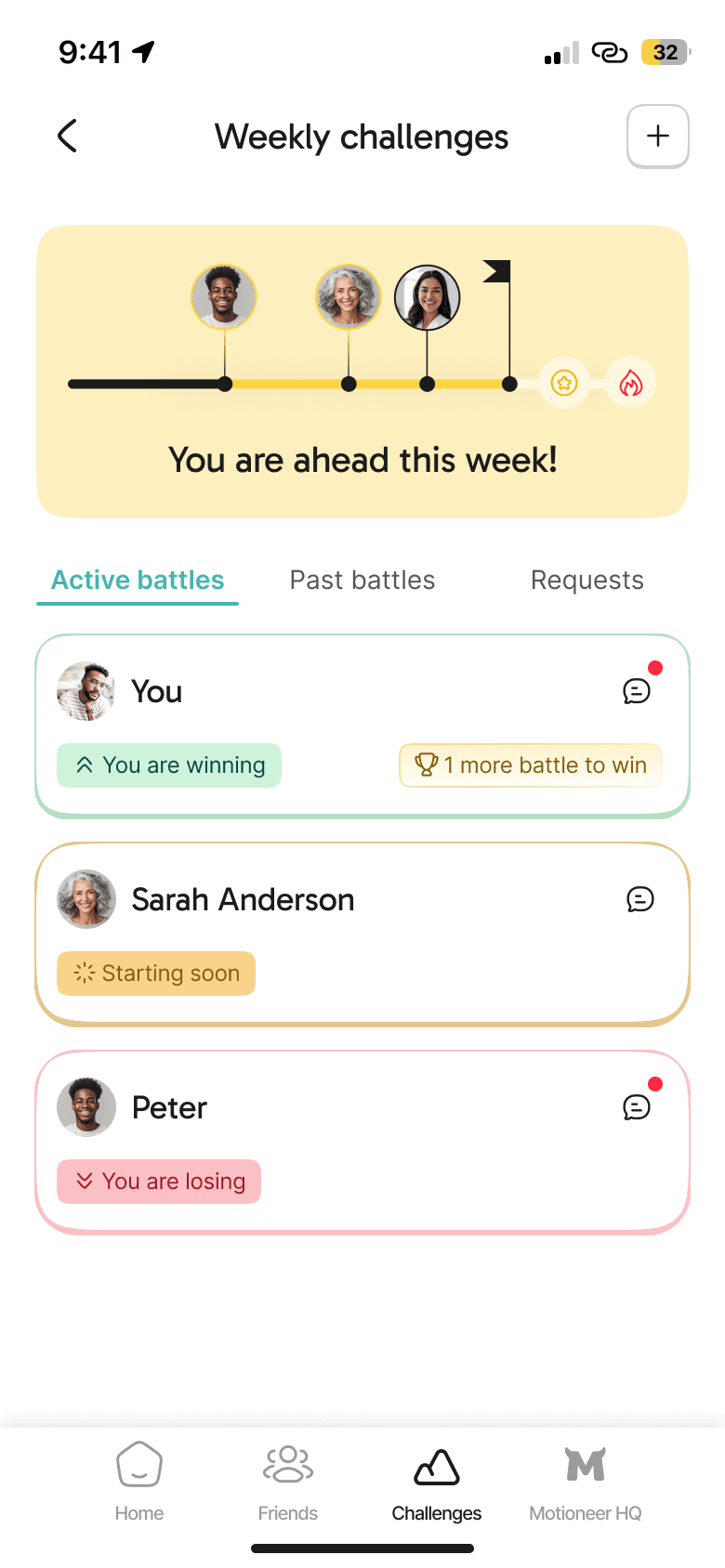

Why do most step challenges with friends fall apart?
Step challenges with friends are one of the most-studied behaviour-change tools we have. A landmark 2007 JAMA systematic review by Bravata and colleagues found pedometer-based interventions increased participants' daily steps by an average of 26.9% over baseline. A 2016 meta-analysis of goal-progress monitoring in Psychological Bulletin found the effect is stronger when progress is made visible to others. The premise of a step challenge (a group commits, accountability does the rest) is exactly what the research backs.
Most step challenges don't survive the first week. The premise is solid; the execution is where they break. The same three patterns show up every time.
Same target for everyone
“Hit 10,000 steps a day” sounds fair until you remember one person normally walks 4,000 and another walks 12,000. The lower-stepper feels behind by day three and quietly drops out.
Screenshots and spreadsheets
Daily check-ins, end-of-day screenshots, a shared spreadsheet someone has to update. Works for a day. By day five, someone forgets. By day seven, nobody's logging.
Nobody's actually watching
Without a live leaderboard or visible wins, the challenge fades into background noise. The whole engine of a step challenge is social visibility, and most setups don't have any.
How Motion makes step challenges fair and easy
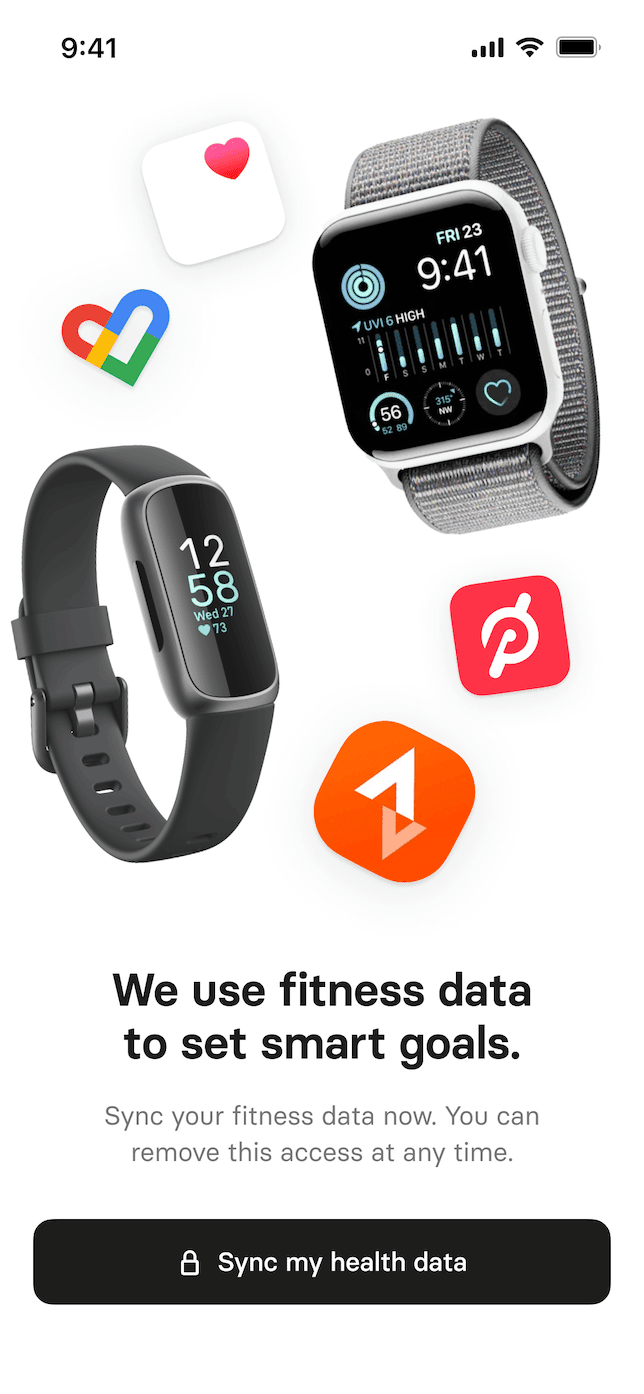

Connect your step data
Motion reads your real activity from your phone or watch
We calculate your true step baseline automatically. No guessing, no estimating. The handicap is fair from day one because it's based on what each person actually walks, not what they think they walk.
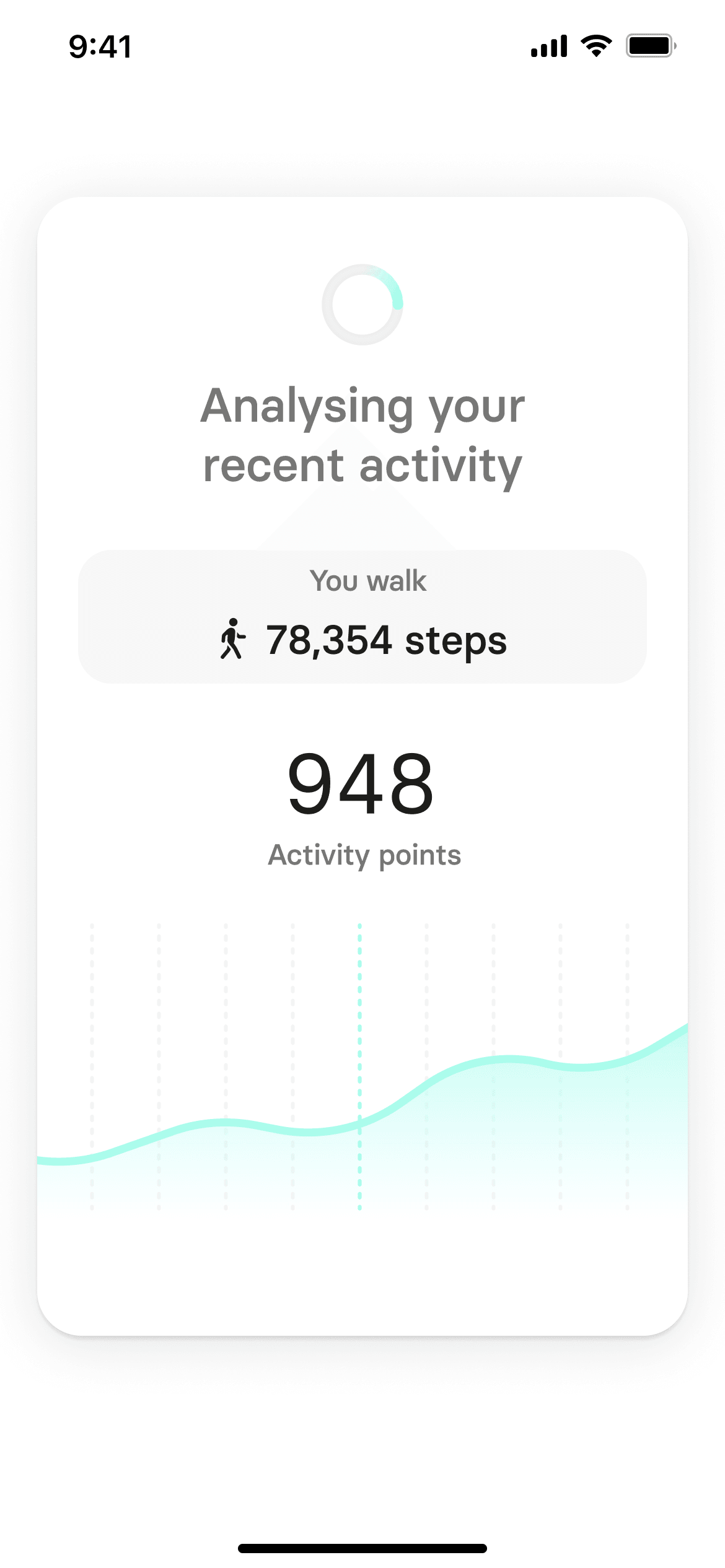

Connect to your friends
Share a link, you're a group
Send your friends a shared link and they show up on the leaderboard. iPhone, Android, Apple Watch, Garmin, Fitbit: Motion pulls every step from every device into the same place.

Start your challenge
Everyone gets a fair target based on their own level
Pick a duration and a difficulty. Each person gets a personalised daily goal that's a real stretch from their normal day. Auto-tracking runs in the background and mini-games keep everyone coming back.
Which step challenge format fits your group?
Different groups need different formats. The five below cover most situations. Pick the one that matches your group's vibe, fitness mix, and how much time you've got. If you're gearing up for the NHS's new Movement 26.2 challenge - a marathon's worth of walking (26.2 miles) every month - the 30-day format below is the closest match.
30-day step challenge
Best for: building a real habit. The classic format: long enough to make daily movement a routine, short enough that motivation holds. Aligns nicely with a calendar month, which makes it easy to start and easy to commit to. Most groups use a +25% lift over each person's baseline. Full 30-day guide →
7-day step challenge
Best for: first-time groups. A safe way to test the format with new friends or a workplace team. Low commitment, easy to win, and short enough that nobody bails. Often run as a recurring weekly competition rather than a one-off, especially in offices. Full 7-day guide →
Team step challenge
Best for: mixed fitness levels. Combine everyone's daily goals into one shared total and the group works together to hit it. Great when people are at very different fitness levels, or when you want collaboration over competition. Workplaces especially love this mode. Full team challenge guide →
Workplace step challenge
Best for: office wellness programs. Cheap, inclusive, and no fitness experience required. Running in Team mode by department is the strongest setup: it folds in employees who'd never win a raw step count race and turns the whole thing into a group effort. Full workplace guide →
Family step challenge
Best for: multi-generational groups. Personalised goals make family step challenges fair across very different ages and fitness levels. Grandma walking 3,000 steps a day and a teenager doing 12,000 can both compete on fair terms when each has their own +25% target. Full family guide →
Try our free online step challenge builder
Add yourself and your friends, set a difficulty, and we'll calculate a personalised daily goal for each person. Share the link - no sign-up, no install.
How do you set fair step challenge goals across different fitness levels?
The single biggest mistake in step challenges: setting one absolute goal everyone has to hit. "Hit 10,000 steps a day" sounds fair until you realise one person normally walks 4,000 and another normally walks 11,000. One person is making real lifestyle changes; the other is coasting. (The 10,000-step number itself isn't from clinical research. It traces back to a 1960s marketing campaign for the Japanese pedometer manpo-kei. A 2019 JAMA Internal Medicine cohort study by I-Min Lee et al. found mortality benefits plateauing around 7,500 steps a day in older women. There's no magic threshold.)
Set each person's goal as a percentage lift over their normal day. Both the 4,000-step person and the 11,000-step person committing to +25% are doing equivalent work. The challenge becomes about effort and consistency, not who has a desk-free job.
Most groups land somewhere between +10% (Steady) and +25% (Stretch). +40% (Push) only works for shorter challenges or highly motivated groups. Motion calculates everyone's baseline from real activity data, so nobody has to guess or self-report. Our free builder handles the math too if you want a quick plan before installing the app.
How do you track a step challenge without it falling apart?
Once you've set fair goals, tracking is what kills them. Manual tracking (screenshots, spreadsheets, daily group-chat check-ins) works for a day, then someone forgets, then the whole thing falls apart. Step challenges live or die on whether tracking is invisible.
A 2017 randomised trial published in JAMA Internal Medicine, the Framingham Heart Study's gamification trial by Patel et al., found that participants in automatically-tracked, socially-incentivised step programs hit their daily goals far more often than control groups, and the effect persisted after the intervention ended. Automatic, social, visible. That's the formula.
Motion delivers all three:
📊 Accurate baselines from real data. Motion uses your actual phone or wearable data to set true baselines. No self-reporting, no guessing at typical step counts.
📡 Live leaderboard during the challenge. See everyone's steps update through the day. No screenshots, no honor system, no end-of-day reckoning.
🏃 All activities count. Runs, hikes, gym sessions, and yoga earn points too. Friends who don't love walking can still compete on their terms.
Tools to run your step challenge
Motion app — the full solution
Accurate fair goals from real data, automatic step tracking, a live leaderboard, and mini-games that keep your group motivated. Free for iOS and Android.
Read moreFree Step Challenge Builder
Quick browser tool. Build a fair step challenge in 30 seconds and share a link. No sign-up needed.
Read moreSteps Goal Calculator
Find your personalised daily step goal based on your activity level, fitness goals, and lifestyle.
Read moreStep challenge FAQs
If you have anything else you want to ask, reach out to us.
What is a step challenge?
A step challenge is a friendly competition (or team effort) where a group of people commit to hitting a daily step goal over a set number of days. It can be head-to-head, where each person races their own personalised goal, or team-based, where everyone's steps roll up into a shared total. The point isn't the steps themselves, it's the social accountability that makes you actually go for that lunchtime walk.
How long should a step challenge be?
Shorter challenges (3–7 days) are great for testing the format with a new group or running themed weeks. Two-week challenges hit the sweet spot for habit formation without the mid-challenge energy drop. 30-day challenges work well for motivated groups and align nicely with monthly goal-setting. Anything longer than 60 days tends to lose momentum. Better to run back-to-back 30-day challenges than one 90-day grind.
How do you make a step challenge fair when everyone has different baselines?
Set each person's goal relative to their own normal day, not an absolute number. A 4,000-steps-a-day person committing to +25% is working hard; making them race a 12,000-steps-a-day friend on a flat target is pointless. Motion calculates everyone's baseline from real phone or wearable data and sets personalised goals automatically. The free Step Challenge Builder handles the math too if you want to plan a challenge before installing the app.
What's the difference between team and compete mode in a step challenge?
In Compete mode, each person races their own personal goal: it's about consistency relative to your own baseline. In Team mode, everyone's daily goals combine into one shared total and the group works together to hit it. Compete mode suits groups that thrive on rivalry. Team mode suits groups at very different fitness levels, or workplaces where you want collaboration over competition.
Can you run a step challenge without an app?
You can — but it's usually how step challenges die. Without automatic tracking, someone has to remember to share screenshots each day, someone has to tally totals, and at least one person stops bothering by day 5. Motion pulls step data from phones and wearables automatically, so the challenge runs itself. The free Step Challenge Builder generates a plan you can share with friends; pair it with Motion and the tracking is hands-off.
What's a realistic step goal for a step challenge?
Don't pick an absolute number. Pick a percentage lift over each person's baseline. Most people fall between 3,000 and 10,000 steps a day, and a 10–25% lift is achievable and sustainable. At 40%+ you're into territory for shorter challenges or highly motivated groups. Setting goals too high is the #1 reason step challenges fail by day 3.
Are step challenges actually effective for fitness?
Yes, with a caveat. Step challenges don't replace structured training. They're behaviour-change tools. The most-cited evidence is Bravata et al.'s 2007 JAMA systematic review, which found pedometer-based interventions increased daily steps by an average of 26.9% over baseline. The 2017 BE FIT randomised trial in JAMA Internal Medicine showed that gamified, socially-incentivised programs outperformed control groups by a wide margin, with a portion of the effect persisting after the intervention ended. Not magic, but very good at increasing daily movement, building consistency, and cutting sedentary time. Those things matter more for long-term health than hitting an exact step count.
Can I run a step challenge with coworkers?
Step challenges are one of the most popular workplace wellness formats because they're cheap, inclusive, and don't require any fitness background. Team mode is the best fit for offices: people compete by department rather than as individuals, which pulls in employees who'd never win a head-to-head step count race.

Your Fitness Journey Starts Here
Download Motion free and discover why this is the fitness app you'll actually keep using. Your future self (and your Motmot) will thank you.

