
Your first Winter Arc can start small
Choose one habit you want in your life. Give it a place in your week. This beginner's guide and free checklist help you start without filling every spare hour.
Start Winter Arc with one habit you can practise
Winter Arc for beginners starts with a small, clear plan. Choose one thing you want to do more often. Decide when you'll try it, record what happens, and review it after a week.
The Winter Arc challenge usually runs during October, November and December. You can join on any date. You don't need to be fit already, post progress photos or change your whole routine.
For your first week, you need:
- One habit with a clear action.
- A time or part of your day when it can fit.
- A smaller version for a busy day.
- A place to record it and a day to review it.
This guide uses a short walk as an example. Reading a few pages or making time for a hobby can work too. The first week helps you learn what suits your life.

Start with an action small enough to try in the week you already have.
Choose your first Winter Arc habit
Pick something you would still want to do after the trend has passed. It might give you time outdoors, a break from your desk or space for something you enjoy.
Then turn the idea into an action you can see. "Get fitter" gives you little to work with at lunchtime. "Take a short walk after lunch on Tuesday and Thursday" tells you what to do next.
A few starting options:
- Walking: a five-minute loop after lunch twice this week.
- Reading: two pages after making an evening drink.
- A hobby: ten minutes with your drawing pad on Saturday.
- A break from your phone: leave it in another room while you eat.
These are examples, not a list to finish. Pick one for now. The NHS beginner activity guide also suggests starting small and planning where and when to be active.
If you choose walking, use a length that feels comfortable today. Our walking Winter Arc plan helps you choose a starting goal and plan for the season.
Your first week of Winter Arc, day by day
Use these seven days to test your plan. You can start on any day of the week. There is no need to complete a new task on every day if your schedule changes.
Day 1: write one clear action
Choose your habit and the first time you'll try it. Put it somewhere you will see it. For example, write "five-minute walk after lunch tomorrow" on the fridge.
Day 2: try it once
Do the action at the time you chose. If it does not happen, note what got in the way. Keep the note brief and plain, such as "meeting ran late".
Day 3: make the next attempt easier
Look at the practical details. Put your shoes near the door, choose a shorter route or move your book beside the kettle. One useful change is enough.
Day 4: try the smaller version
Test a version that fits a busy day. A shorter walk, one page or a few minutes with your hobby all count as practice. You can still rest or skip the task when you need to.
Day 5: repeat what fitted
Try the same action again if it suits your plan. Keep the goal steady for now. You are finding a rhythm before adding more to it.
Day 6: choose how much company you want
You could ask a friend to join a walk or swap a short weekly update. Keeping your own private record is fine too. Choose the level of contact you enjoy.
Day 7: review and plan the next week
Ask what fitted, what got in the way and what you want to change. Keep one thing that helped. Choose the next date you'll try your habit, even if this week was patchy.
Free printable beginner’s Winter Arc checklist
Put your first habit and start date on a one-page PDF. Download and print your checklist, then tick off the steps on paper.
Free PDF · 1 A4 page
Add your goal to the sheet, then download it to print and fill in by hand. Leave the fields blank for an empty copy.
View blank PDF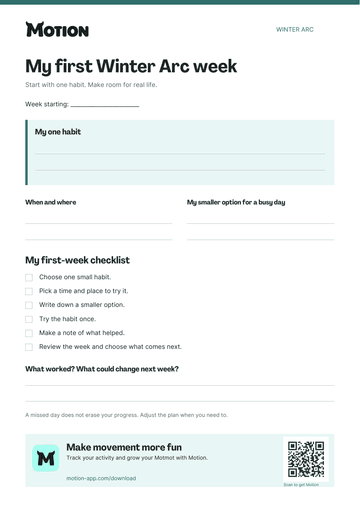
Give your Winter Arc habit a smaller version
Decide what you can shorten before a busy day arrives. A small version gives you another option when the full plan will not fit.
For a ten-minute walk, that might be one short loop near home. For ten pages of reading, it could be one page. Write both versions down so you don't have to decide in a rush.
The smaller version is an option, not a rule to push through illness or pain. Some days need rest. If your full goal rarely fits, make the smaller version your usual plan for a while.
Family schedules can change with little notice. Our Winter Arc for mums has ideas for school days, half-term and time at home.
Keep a simple record of your Winter Arc
A tick and a short note are enough to begin. If your goal is a walk after lunch, record whether you took it. You can add minutes or steps if that helps you see progress.
Use our free beginner checklist to plan your first week. For a daily walking record, download the walking tracker. You can also use Motion to track your activity on your phone.
Look at the pattern at the end of the week. Perhaps lunchtime worked well but evenings felt rushed. Perhaps walking with a friend made it easier to get out. Use what you notice to shape next week.
You don't need photos, weigh-ins or a public streak for this plan. If tracking starts to feel like pressure, use fewer details or take a break from it.
Restart Winter Arc after a missed day
Choose the next small action when you're ready. You can carry on without resetting the calendar or making up every missed task.
If you stopped for a few days, check why. A plan that depended on spare evenings may need a lunch slot. A walk that felt too long may need a shorter route. Change the part that did not fit.
Keep your record honest. A missed day, rest day or changed plan can stay on the page. It tells you something about your week, not about your worth.
After a longer break, begin near what feels manageable now. There is no deadline by which the habit must feel easy. You can keep practising after December.
The Winter Arc rules guide covers the wider challenge. If energy or symptoms vary during perimenopause, try our adaptable Winter Arc guide.
Try Motion if movement is your first habit
Motion gives your activity a weekly goal based on your own activity history. You can use your phone or connect a tracker. Your movement also helps a Motmot, your virtual pet, grow.
Friends can join weekly battles based on progress towards each person's own goal. You can start at different activity levels and still play together.
Motion is free to start on iOS and Android. Keep your checklist for the habit you chose and use Motion to add a little fun to being active.
Beginner's Winter Arc questions
If you have anything else you want to ask, reach out to us.
How do I start Winter Arc as a beginner?
Choose one small habit, decide when to try it and keep a simple record for a week. Review what fitted your life before adding anything else. A short walk is one option, but you can choose another habit.
How many habits should a beginner choose for Winter Arc?
We suggest one habit for your first week. You can learn how it fits your day before deciding whether to add another. There is no need to change exercise, food, sleep and hobbies all at once.
Do I need a gym or fitness tracker for Winter Arc?
No. You can start with an activity that needs no new kit and record it on paper. If you choose walking, a phone can count steps or a clock can help you track walking time.
Can I start Winter Arc late?
Yes. Start on a date that works for you and use the time you have. Your first week can begin in October, November or December. You do not need to catch up on earlier weeks.
Have I failed Winter Arc if I miss a day?
No. With this plan, you can take the next small step when you are ready. Review why the day was missed and adjust the plan if needed. Rest and interruptions belong in a normal life.
Can I download the beginner Winter Arc checklist?
Yes. Add your chosen habit and start date, then download a free one-page PDF. You can also get a blank copy. Print it and fill in the checklist by hand.

Make your next small step more fun
Try weekly goals, a virtual pet and friendly challenges in Motion.

