
Google Health Alternatives in 2026
Google Health (the renamed Fitbit app) is a serious health platform with Cardio Load strain scoring, Gemini AI coaching, and deep wearable tracking. But it stripped out social challenges, locked smart features behind a $9.99/month paywall, and needs a wearable to do its best work. Here's an honest comparison, and when Motion is the better choice.
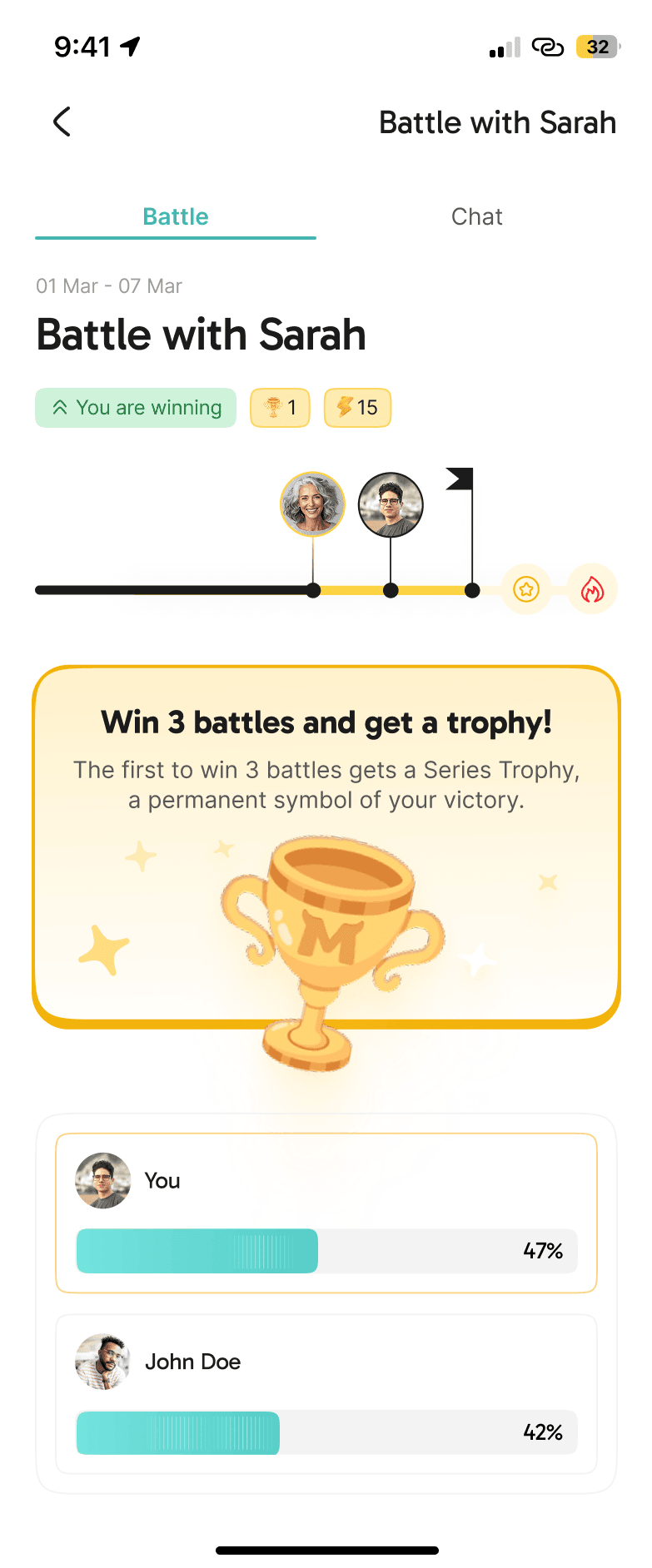
What is Google Health, and who is it for?
Google Health is the new name for the Fitbit app. On May 19, 2026, Google rebranded Fitbit as Google Health, reorganized it into four tabs (Today, Fitness, Sleep, Health), and added a Gemini-powered AI Health Coach. [1] If you're weighing Fitbit devices and the wearable ecosystem specifically, see our Fitbit alternatives page. This page covers the new Google Health app: what it does well, what was removed in the redesign, and whether Motion is a better fit for you.
Credit where it's due. Google Health is a serious product, and for the right user it's hard to beat:
- Cardio Load. A weekly heart-rate strain score built on the Banister TRIMP model (a formula that weighs your workout duration by your heart-rate intensity to give a single strain number), calibrated to your own past four weeks of activity. [2] Google switched the target from daily to weekly in October 2025 after user backlash that rest days were being flagged as undertraining. [3]
- Gemini AI coaching. A natural-language coach that reads your health data and suggests training adjustments over time, gated behind Google Health Premium at $9.99/month or $99.99/year. [4]
- Rich passive tracking. VO2 max, Readiness, SpO2, and Resilience (stress tracking) in a data-dense dashboard that runners and health enthusiasts genuinely value.
What the 2026 redesign removed is the social side. Challenges, Adventures, Open Groups, badges, the community feed, and the web dashboard are all gone. [1] The Play Store rating fell to around 3.8 amid review-bombing over those losses. [1]
For the full story on the rebrand, see our blog post: Fitbit is now Google Health
Google Health vs Motion: side-by-side
Both apps do something genuinely useful. Google Health measures your body with clinical-grade seriousness. Motion is a social, effort-based fitness game. Here's how they line up on the dimensions that usually decide it (pricing as of 2026).
| Dimension | Google Health | Motion |
|---|---|---|
| Price | Free app; Premium $9.99/mo or $99.99/yr (up from $79.99/yr) [4]; best experience needs a Fitbit or Pixel wearable (sold separately) | Free to download and play; optional Premium |
| Friend / group challenges | Removed in 2026: Challenges, Adventures, Open Groups, badges, and the community feed were all cut [1] | Built around them: weekly battles, step challenges, team Bingo, and Motmot pets |
| Goal model and fairness | Cardio Load: an adaptive weekly heart-rate strain target from your own 4-week history; needs a wearable; private solo score [2] | Adaptive weekly step goal from your own history; scored as % of your target so a beginner can beat an athlete; works from any phone |
| Trackers supported | Pixel Watch and Fitbit wearables; phone (limited); two-way sync with Apple Health and Health Connect since August 2026 (how to set it up) | Phone plus most major wearables, including Fitbit. See full tracker compatibility |
| Platforms | iOS and Android | iOS and Android |
| Rating | ~3.8 on Google Play after the 2026 transition [1] | 4.6/5 App Store |
| Best for | Data-driven users and athletes who want clinical-grade metrics and AI coaching from a Pixel Watch or Fitbit | Mixed-ability friend groups, families, and workplace teams who want fair, fun, social competition |
The two can work together. Fitbit is one of Motion's supported trackers, so you can keep your wearable for precise health data and bring friends into Motion for fair weekly challenges. See full tracker compatibility.
Is there a simpler, fairer alternative to Cardio Load goals?
Yes. If what you want is an adaptive goal built from your own recent history, Motion does that without needing a heart-rate wearable.
Cardio Load is a genuinely smart idea. It builds a personal weekly strain target from your own past four weeks, so your goal adjusts as your fitness changes. [2] That's the right model: your own history is a much better benchmark than a generic 10,000-step target.
But Cardio Load has real limits:
- It requires continuous heart-rate tracking, which means owning a Pixel Watch or Fitbit wearable.
- It's a private, solo number. You can't use it to compete fairly in a group.
- The smart coaching built on top of it is locked behind Google Health Premium at $9.99/month. [4]
Motion's adaptive goal works from the same core idea: a personal weekly target built from your own recent activity, which adjusts as your habits change. The difference is it runs from the phone in your pocket, counts any kind of movement, is free, and scores your effort as a percentage so you can compete fairly in a group. A beginner hitting 100% of their goal beats an athlete hitting 80% of theirs. Read more about how this works in our guide to effort-based fitness goals.
Google's Cardio Load proves the adaptive model is right. Motion brings that model to people who don't own a wearable and adds the social layer Google removed.
For a closer look at how Cardio Load works: What is Cardio Load in Google Health?
When is Motion the better choice than Google Health?
Google Health is excellent at one job: measuring your body accurately from a wearable. Motion is the better fit when what you actually want is fair, motivating group competition without a paywall or a hardware purchase. Here's where it pulls ahead.
Works from your phone
Google Health's best features, including Cardio Load, need a Pixel Watch or Fitbit with continuous heart-rate tracking. Motion runs from the phone in your pocket and works with whatever tracker your group already owns. Nobody's left out for having the wrong device.
Beginners can actually win
Google Health's Cardio Load is a private solo score. Its remaining steps view scores absolute output, so the fittest person wins by default. Motion scores the percentage of YOUR OWN adaptive goal you hit, so a new walker can out-compete a marathoner in the same weekly battle. That's what makes it work for mixed-ability families, friends, and teams.
The layer Google removed
Google Health cut its Challenges, Adventures, Open Groups, badges, and community feed in the 2026 redesign. Motion is built around all of that. Weekly activity battles, group step challenges, team Bingo, and a community that celebrates every kind of effort.
Adaptive and free
Google's Gemini Health Coach and smart training plans are locked behind $9.99/month. Motion's adaptive goal builds your weekly target from your own activity history and scores your effort fairly. It's free. No subscription needed to get goals that actually fit you.
Encouraging, not clinical
Google Health's tone is data-first. Readiness scores, strain numbers, an AI coach. Motion leans the other way. A Motmot virtual pet that cheers you on, weekly battles with friends, and no-punishment progress tracking. No money staked, no guilt.
Keep your wearable too
You don't have to pick one. Keep using your Pixel Watch or Fitbit for health tracking, connect it to Motion, and bring friends in for fair weekly battles. Want to try it? Set up a free group challenge in 30 seconds with the step challenge builder.
Google Health alternatives: frequently asked questions
If you have anything else you want to ask, reach out to us.
What is Google Health?
Google Health is the renamed Fitbit app, launched on May 19, 2026. [1] It tracks steps, sleep, heart rate, and health metrics from Pixel Watch and Fitbit wearables, adds a Cardio Load weekly strain score, and includes a Gemini AI Health Coach in the paid tier. The app replaced the Fitbit app entirely and is organized around four tabs: Today, Fitness, Sleep, and Health.
What features did Google Health remove?
The 2026 Google Health redesign removed the social features many Fitbit users relied on. Challenges, Adventures, Open Groups, badges, trophies, the community feed, and the web dashboard were all cut. [1] The removal triggered significant backlash and Play Store review-bombing. If group challenges are what you're missing, Motion has weekly activity battles, step challenges, and Get Fit Bingo.
What is Cardio Load in Google Health, and is there a simpler alternative?
Cardio Load is Google Health's weekly heart-rate strain score. It uses the Banister TRIMP model, a formula that weighs your workout duration by your heart-rate intensity to give a single strain number, and builds a personalized weekly target from your own past four weeks of data. [2] It's a smart approach, but it needs a heart-rate wearable and the coaching built on it costs $9.99/month. [4] Motion's adaptive goal works from the same idea, a personal weekly target from your own history, but runs from any phone, is free, and scores effort as a percentage so you can compete fairly in a group.
Is Google Health Premium worth it?
It depends on what you want from it. Google Health Premium costs $9.99/month or $99.99/year as of 2026, up from the old Fitbit Premium price of $79.99/year. [4] It unlocks the Gemini Health Coach, adaptive fitness plans, and deeper sleep insights, and it's included free with Google One AI Pro and Ultra plans. If you're a data-driven athlete who wants AI coaching from a Pixel Watch or Fitbit, it's reasonable value. If you mainly want social challenges and fair group competition, those features aren't in Premium, and Motion is a better fit.
How is Motion different from Google Health?
Google Health measures your body; Motion is a social fitness game. Google Health passively tracks steps, sleep, heart rate, and strain (Cardio Load) from a wearable, with a Gemini AI coach in the paid tier. Motion scores the percentage of your own adaptive weekly goal you hit, so beginners can out-compete athletes, and wraps that in weekly battles, group step challenges, and a free Motmot virtual pet. They can work together: track with your Fitbit or Pixel Watch and compete in Motion.
Can I use my Fitbit or Pixel Watch with Motion?
Yes. Fitbit is one of Motion's supported tracker integrations, so your wearable data feeds Motion's leaderboards automatically. See full tracker compatibility for all the devices Motion supports. This means you can keep your existing hardware for precise health tracking and still join fair group challenges in Motion.
Related comparisons and features
Fitbit alternatives
Weighing the Fitbit hardware and wearable ecosystem specifically? This page covers the device and brand angle, and where Motion fits in.
Read moreGoogle Fit alternatives
Google's older lightweight activity tracker is being wound down into Google Health. Here's how it stacks up and what to use instead.
Read moreAdaptive AI fitness goals
How Motion builds your weekly step goal from your own activity history, and why effort-based scoring beats fixed targets for every fitness level.
Read more
Your Fitness Journey Starts Here
Download Motion free and discover why this is the fitness app you'll actually keep using. Your future self (and your Motmot) will thank you.

