
Top 10 Christmas Gifts for Fitbit Lovers (2026)
A gift guide for the Fitbit user in your life. Accessories that protect their tracker, recovery gear that keeps them moving, and a way to get back the social features Google removed this year.

What changed for Fitbit users in 2026?
Quite a lot, and it matters for what you buy them.
On 19 May 2026, the Fitbit app became Google Health. The change was automatic and there was no way to opt out. Accounts, data and subscriptions all moved across.
The tracking engine survived. A lot of the furniture did not. Badges, groups, the web dashboard, Sleep Profile and the social features went with it, which is why the reaction was less than warm. Our full write-up of what changed when Fitbit became Google Health has the detail.
The hardware still says Fitbit on it. Charge 6, Inspire 3, Versa 4 and Sense 2 are all still sold, joined this year by the Fitbit Air.
What this means for gifting: the person you are buying for has probably lost the challenges and badges they used to enjoy, without asking for that to happen. That is worth knowing before you pick something.
The top 10 gifts for Fitbit lovers
Prices are rough guides and move around, especially in the run-up to Christmas.
1. Replacement bands, 3-pack, around $15 to $25
Why it works: their tracker goes everywhere. Gym, shower, bed, work. After a few months bands get sweaty, scratched and faded. A fresh three-pack lets them swap for different occasions.
What to look for: silicone sport bands are the most versatile. Check their exact model first, because bands are not interchangeable. A Charge 6 band will not fit a Versa 4.
2. Motion Hero, $77.94 or $129.99
Why it is number two: because it replaces what Google took out.
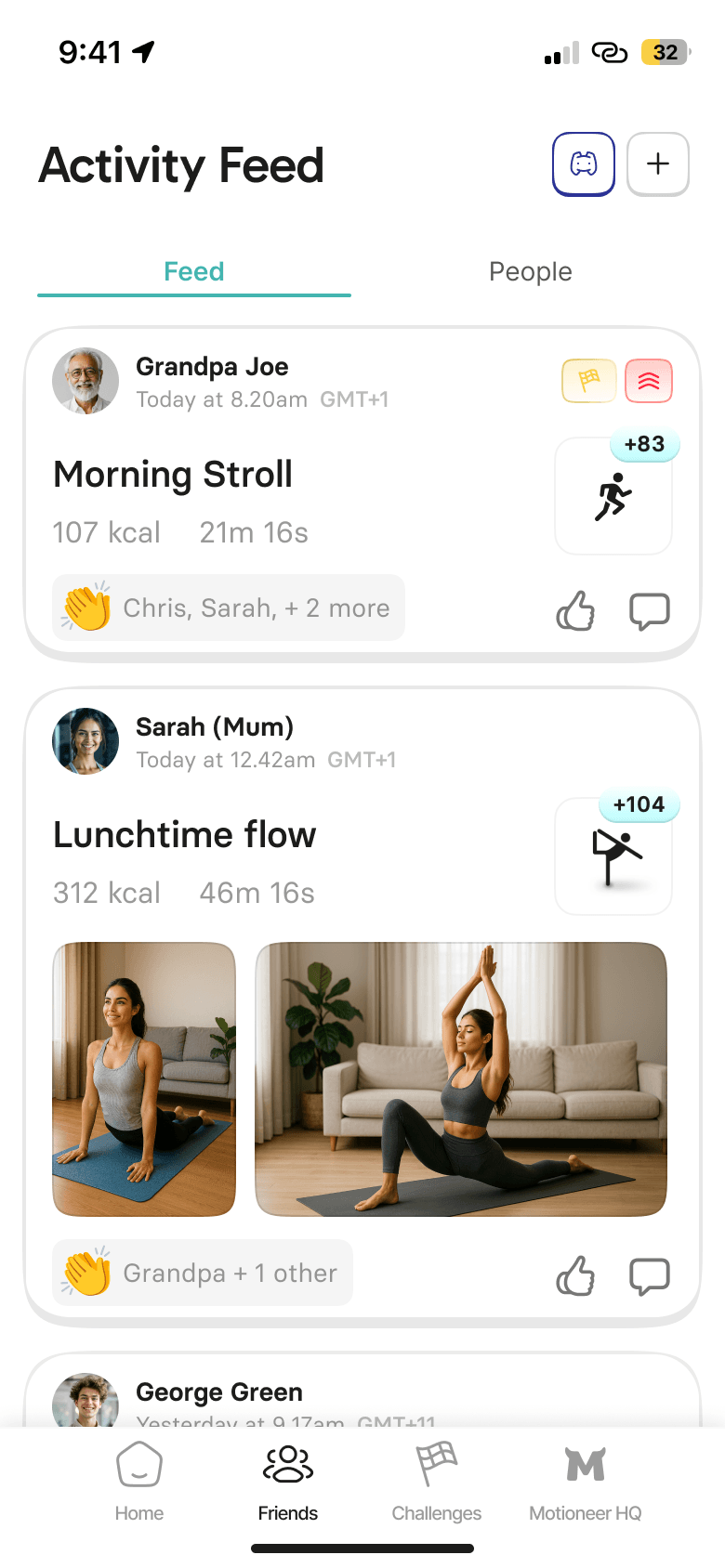
Google Health removed groups, badges and the social layer this year. Motion syncs with their Fitbit and puts that back:
- Friend challenges with live leaderboards, so their step count is competitive again
- An evolving Motmot, a virtual pet that grows as they move, and never dies if they miss a day
- Adaptive goals based on their real patterns rather than a flat 10,000 for everyone
- No streaks to break, which matters in December when life gets in the way
They keep the Fitbit. Nothing to switch, no new hardware.
Gift 6 Months | Gift 12 Months | Learn more about Motion Hero
3. Charging stand, around $15 to $30
Why it works: nobody enjoys hunting for that small proprietary cable. A stand keeps the tracker visible on the bedside table and charging overnight.
What to look for: check model compatibility. Some double as alarm clocks or charge a phone at the same time.
4. Cleaning kit, around $12 to $18
Why it matters: trackers get grim. Sweat, skin and soap residue build up under the band and around the sensors. A proper kit keeps things hygienic and the sensors reading accurately.
What is included: usually a cleaning solution, microfibre cloths and soft brushes made for electronics. Two minutes of work that extends the life of a device worth well over $100.
5. Running belt, around $25 to $35
Why it works: if they walk or run, they need somewhere secure for a phone, keys and a card. A bounce-free belt sits flat and does not shift about.
Which type: SPIbelt is a zipped pouch, good for keys and cards. FlipBelt is a stretchy tube you tuck things into, better for phones. Both do the job well.
6. Compression socks, around $20 to $40
Why they help: after long walks, compression socks can ease muscle soreness and support recovery. Anyone regularly clearing 15,000 steps will feel the difference in their calves.
What to look for: graduated compression around 15 to 20 mmHg suits daily use. Patterns make them feel less medical. Sockwell, CEP and Physix Gear are all solid.
7. Foam roller or massage gun, around $30 to $150
Foam roller, $30 to $50. Low-tech, lasts for years, good for tight calves and hamstrings after a big step day. TriggerPoint and LuxFit are reliable.
Massage gun, $80 to $150. More fun to use. Theragun and Hypervolt are the premium picks, though cheaper models are fine for casual use.
8. Fitness journal, around $18 to $28
Why it is a surprise hit: digital tracking is excellent at numbers and poor at reflection. A paper journal lets them log the things a tracker misses, like how a session actually felt, or what they lifted.
Best for: the planners, and anyone who enjoys the ritual as much as the data.
9. High-visibility vest or clip-on lights, around $20 to $35
Why it is thoughtful: by December, walks happen in the dark at both ends of the day. If they are getting steps in before sunrise or after sunset, being seen matters.
What to look for: lightweight LED vests such as the Noxgear Tracer360, or simple clip-on lights. Reflective gear with a pocket is a bonus. Our guide to walking through winter covers the rest of the kit.
10. Insulated water bottle with time markers, around $25 to $40
Why it works: the hourly markers give a gentle structure to the day, and refilling is a natural prompt to get up and move. HydroJug, Owala and Stanley all make good ones.
What to look for: proper insulation, a lid they can drink from one-handed, and something that actually fits a car cup holder.
Why Motion Hero is worth a closer look this year
In most years this would be a nice extra. In 2026 it fills a specific gap.
The social layer is gone. Google Health removed groups, badges and challenges in May. If the person you are buying for used those, they have spent the year without them. Motion puts friend challenges and live leaderboards back, working from the Fitbit data they already have.
Competition that a beginner can win. Motion scores the percentage of your own adaptive goal you hit, not raw step totals. Someone building back up from 4,000 steps can genuinely beat a daily runner, because you are both measured against your own target.
A companion instead of a counter. The Motmot evolves as they keep moving. It does not die, and there is no streak to lose, so a quiet week costs them nothing. That is deliberate, because a broken streak in late December is where most people quietly stop.
It works with what they own. Motion syncs with Fitbit, Apple Health and Strava. No new hardware and no switching ecosystems.
Who it suits
- Fitbit users who lost their groups and badges in the Google Health change
- Competitive people who like a leaderboard
- Anyone who says they should walk more but struggles to keep it going
- People working from home who need a reason to get out
How gifting works
- You buy a 6-month or 12-month gift subscription
- You get a gift code by email, either instantly or scheduled for Christmas morning
- They redeem it, connect their Fitbit, and join a challenge
- It takes about two minutes, and they never enter payment details
Price: $77.94 for 6 months, or $129.99 for 12 months.
Frequently asked questions
If you have anything else you want to ask, reach out to us.
What do you buy someone who already has a Fitbit?
Something that improves the experience rather than replaces the device. That splits three ways: things that add motivation, like Motion Hero for challenges and leaderboards; things that protect the tracker, like bands, cleaning kits and charging stands; and things that support the walking itself, like recovery gear and visibility kit for dark mornings.
Is Fitbit Premium still a thing in 2026?
Not under that name, and it costs more. Fitbit Premium was renamed Google Health Premium on 19 May 2026 and existing subscriptions rolled over automatically. It now runs about $9.99 a month or $99.99 a year, up from $79.99 a year under the old name. The paid tier adds a Gemini-powered coach, adaptive fitness plans and deeper sleep insights, and it needs a Fitbit or Pixel Watch to use. What it does not add back is the social side. See our guide to what changed when Fitbit became Google Health.
Can I give a digital gift for Christmas morning?
Yes. Motion Hero gift codes arrive by email, either straight away or scheduled for Christmas Day. Plenty of people pair the code with something small and physical, like a set of bands, so there is something to unwrap. No shipping, no sizing, and it works for last-minute shopping.
Do Fitbit bands fit every model?
No, and this catches people out. Bands are model-specific, so a Charge 6 band will not fit a Versa 4. Check the exact model before buying. It is often printed on the back of the tracker, or visible in the app. Sizing matters too, though most people take the standard size.
Which Fitbit devices are still sold in 2026?
The hardware kept the Fitbit name even though the app did not. Charge 6, Inspire 3, Versa 4 and Sense 2 are all still available, and the Fitbit Air joined the range this year. If you are buying a tracker rather than an accessory, check what their existing bands and chargers will fit.
What if they have lost interest in their tracker?
Very common, and it usually happens once the novelty of the data wears off. More features rarely fix it. Social accountability tends to, which is why the loss of Fitbit's groups and badges this year hit some people harder than they expected. Motion Hero is built around that, with friend challenges and a pet that responds to their movement. A walking buddy or a local group does the same job offline.
Are these gifts suitable for someone new to fitness tracking?
Most assume they already own a tracker they like. If they are completely new, start with the tracker itself. Once they have been using it for a couple of months, everything here makes sense as an addition. Motion Hero is the exception, since the structure and accountability tend to help beginners most.

Your Fitness Journey Starts Here
Download Motion free and discover why this is the fitness app you'll actually keep using. Your future self (and your Motmot) will thank you.

