
Walkr Alternatives in 2026
Walkr is a genuinely delightful way to turn your steps into a galaxy of collectible planets. But if you want fair, friendly challenges where a mixed-ability group all has a real shot at winning, Motion scores effort instead of in-game progress. Here's an honest comparison.

What is Walkr, and who is it for?
Walkr (by SPARKFUL, the Taiwan-based studio formerly known as Fourdesire, the team behind Plant Nanny and Fortune City) is a gamified pedometer wrapped in a whimsical space-exploration adventure. Your phone's built-in pedometer counts steps automatically, and those steps convert into "energy" that fuels a tiny cartoon spaceship on a journey through the cosmos. Spend energy to discover 100+ uniquely designed planets, complete 30+ missions, rescue cute lost space creatures, build little planet ecosystems, and upgrade your ship. It's less a serious fitness tracker than a cozy idle/collection game that happens to run on real-world walking.
It has earned its reputation honestly. Walkr launched in 2014, won an App Store Best of 2014 award and a Best Apple Watch App award in 2015, and sits at roughly 4.5/5 across 8,000+ US ratings[1] (with well over a million downloads on Android alone).[2] Many players report 5 to 10+ years of daily use. That kind of long-term retention is rare and says a lot about the craft. The art is gorgeous, the tone is calm and non-judgmental, and the whole thing is designed to make movement feel like gentle play rather than exercise. To its real credit, Walkr does not stake your money or pay out cash "rewards": motivation is intrinsic, coming from collecting planets, advancing the story, and caring for cute creatures.
It even has a friendly social layer: link up to 3 friends as co-pilots (the "Bridge" feature) to give and receive bonus energy, join fleets and public "Epics" for collaborative group missions, and climb a Galaxy League that groups players by their galaxy-progression stage so competition feels balanced rather than purely global.
Walkr is best for casual gamers and fitness-curious people of all ages (rated 13+) who respond to cute, story-driven gamification rather than hard data, especially anyone who finds conventional step trackers boring and wants a low-pressure nudge to walk more, plus collectors and idle-game fans who enjoy long-running progression. It's less aimed at serious athletes or data-driven, quantified-self users. Motion shares a lot of that fun-first DNA: both apps use charming virtual companions to make walking playful (Walkr's space creatures, Motion's Motmot pets). The sharpest difference is what happens when friends at different fitness levels actually want to compete.
Motion vs Walkr: side-by-side
Both apps put fun first and both reject money-staking. Where they diverge is fairness, how competition is scored, and tracker support. Here's an honest comparison (pricing as of 2026; figures are approximate and vary by region).
| Dimension | Walkr | Motion |
|---|---|---|
| Price | Free + in-app purchases; optional subscription $7.99/mo or $69.99/yr; "Super Pilot" $1.99; premium "cubes" up to $99.99 (as of 2026)[3] | Free to download and play; optional premium (as of 2026) |
| Friend / group challenges | Cooperative co-pilots, fleets and public "Epics"; Galaxy League ranking by progression stage (not head-to-head step battles) | Private friend, family and workplace step challenges plus head-to-head weekly battles |
| How competition is scored / fairness | Absolute / progression-based: ranking is tied to galaxy progress, which premium "cubes" can accelerate; not effort-handicapped | Effort-based: the percentage of your own adaptive, personalised goal you hit, so mixed-ability groups are leveled fairly |
| Trackers supported | Phone pedometer only (no GPS); broad wearable sync not a focus; Apple Watch can no longer track your steps[4] | Apple Watch, Fitbit, Garmin, Google Fit, Samsung Health and more (see full tracker compatibility) |
| Platforms | iOS, Android, visionOS | iOS, Android |
| Rating | ~4.5/5 App Store (8,000+ US ratings)[5] | 4.6/5 App Store |
| Best for | Casual gamers who want cute, story-driven gamification of walking | Mixed-ability friends, families and teams who want fair, encouraging competition |
Walkr's progression-based ranking is perfect for relaxed, cooperative play: everyone fuels the journey and nobody is punished. But it isn't built for fair head-to-head contests, and because galaxy progress can be sped up with paid "cubes," a faster or bigger-spending player can simply pull ahead. That's exactly the gap Motion fills with effort-based fitness goals.
When is Motion the better choice over Walkr?
If you love Walkr's cute galaxy and just want a gentle, ambient nudge to move, stick with it. It does that job beautifully. But there are a few situations where you'd reach for Motion instead, and the biggest one is fairness in a mixed-ability group.
In Walkr, competition is tied to galaxy progression and absolute galaxy population, and that progression can be bought outright with cubes. So a deconditioned beginner restarting after a break can never realistically out-rank a fitter (or bigger-spending) player on effort alone. Motion scores the percentage of your own personalised, AI-adapted goal you hit, so a grandparent walking 3,000 steps can legitimately beat a marathon runner in the same weekly battle. For beginners, women 40+, and anyone restarting, here's where that matters most.
Mixed-ability friend & family groups
When a beginner, a busy parent and a runner all want to compete in the same group, progression-based ranking that money can accelerate quietly crowns the fittest (or wealthiest). Motion's effort-based scoring makes every weekly activity battle winnable for everyone: 500 steps is celebrated as loudly as 50,000.
Fun without the cube grind
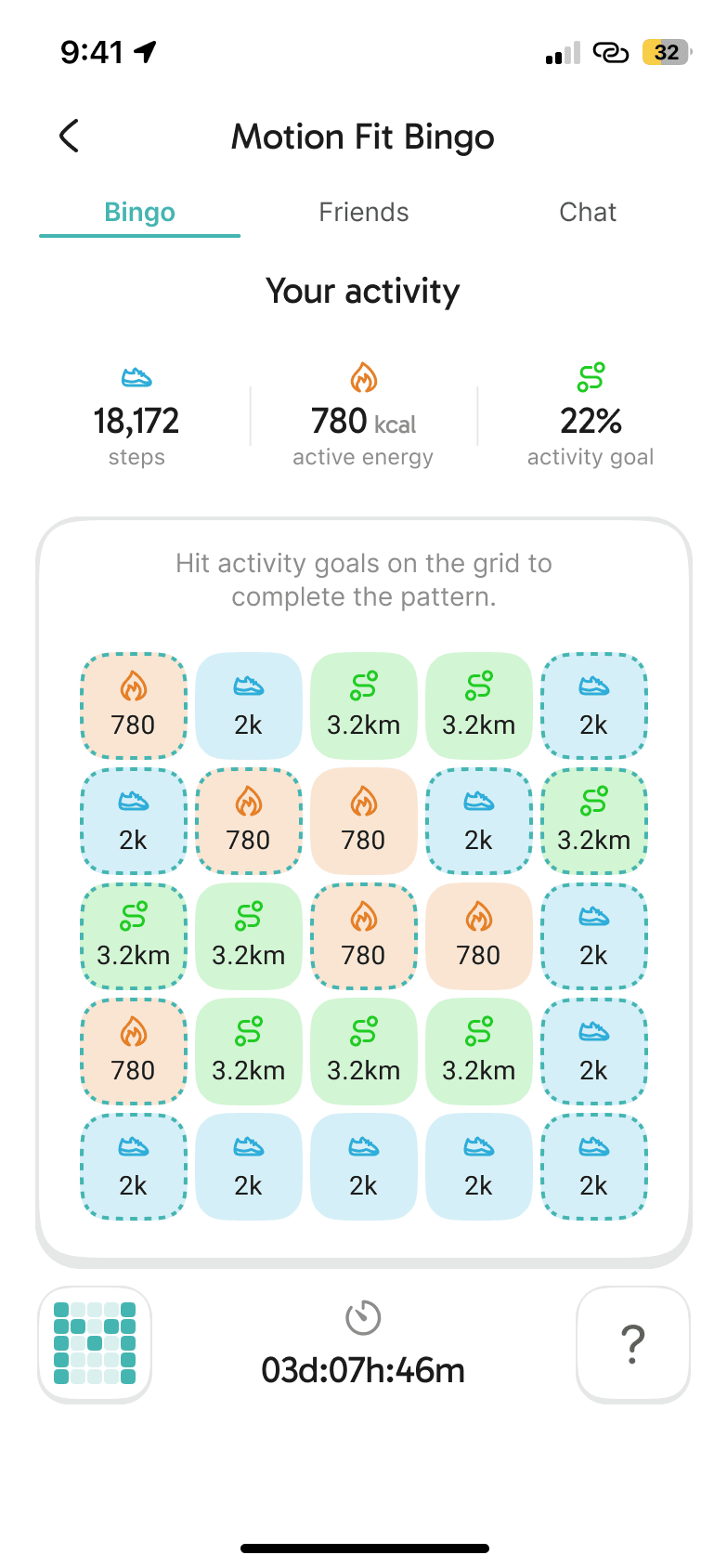
Walkr's loop is collecting planets, with planets that can take 2.5–3 days to discover and premium 'cubes' (up to $99.99) to skip the wait. Motion keeps gamification playful with no-punishment Motmot pets and Get Fit Bingo: variety without a pay-to-progress grind.
Workplaces & organised challenges
Walkr's social side is cooperative and casual. It isn't built for structured, fair contests across a team. Motion runs proper step challenges with live leaderboards, and you can set one up in 30 seconds with the free step challenge builder.
People who wear a real tracker
Walkr relies on your phone's pedometer (no GPS) and, per SPARKFUL's own help docs, cannot use your Apple Watch to track steps, so phone-only counting can miss the walking you do without your phone on you. Motion offers broad tracker compatibility so your Apple Watch, Fitbit or Garmin counts everything.
If you struggle to stay motivated
Walkr is a lovely ambient game, but it's a collection sim first and a fitness tool second. After the early novelty the loop can feel like 'running in circles.' If you're a beginner or restarting and want encouragement that meets you where you are, Motion is built around real, supportive accountability.
If you hate money-staking & rewards churn
Both Walkr and Motion reject money-staking and real-cash 'rewards' churn. If that intrinsic-motivation philosophy is why Walkr appealed but you've outgrown the cube economy, Motion keeps the same values, with fair competition added on top.
Related comparisons and features
Pacer alternatives
Another free, beginner-friendly walking app. How Pacer's global step challenges compare to Motion's fair, effort-based ones.
Read moreSweatcoin alternatives
A move-to-earn rewards app. If you prefer intrinsic motivation over cash and crypto, see how Motion compares.
Read moreStepBet alternatives
Money-staking step games versus Motion's no-stakes, effort-based motivation. Which accountability model actually fits you.
Read moreWalkr alternatives: FAQs
If you have anything else you want to ask, reach out to us.
Is Walkr free?
Yes, Walkr is free to download and play, with optional in-app purchases and an optional subscription. As of 2026 the App Store lists a SPARKFUL subscription at $7.99/month or $69.99/year (bundled as access across SPARKFUL's apps, with a 7-day free trial), a low-cost 'Super Pilot' status at $1.99, and one-off purchases ranging from $0.99 (a Time Machine) up to a $99.99 'Vault of Cubes'.[6] Progression is technically possible without spending money, though cubes exist to skip the wait. Prices vary by region and may have changed, so treat these as approximate.
What's the best Walkr alternative?
Motion is the closest fit if you want Walkr's cute, no-pressure gamification but with fair competition across different fitness levels: it scores you on the percentage of your own adaptive goal rather than your absolute progress, and supports real trackers like Apple Watch, Fitbit and Garmin. If you want a giant global community and weight-loss coaching, Pacer is worth a look; if you'd rather earn rewards for walking, Sweatcoin is worth comparing.
Can I do step challenges with friends on Walkr?
You can do cooperative challenges on Walkr, but not structured head-to-head step contests. Walkr lets you invite up to 3 friends as co-pilots for bonus energy, join fleets and public 'Epics' for collaborative missions, and climb a Galaxy League that groups players by their galaxy-progression stage. Ranking is tied to in-game progression (which paid cubes can accelerate) rather than your personal effort. For fair, structured contests across a mixed-ability group, Motion's step challenges are purpose-built for it.
How is Motion different from Walkr?
The two big differences are fairness and tracking: Walkr ranks you on absolute galaxy progression (which premium cubes can speed up), while Motion uses effort-based scoring so beginners and athletes compete on equal terms. Both apps are playful and both reject money-staking and cash-reward gimmicks, but Walkr counts steps from your phone's pedometer only (no GPS), while Motion offers broad tracker support including Apple Watch, Fitbit, Garmin, Google Fit and Samsung Health.
Does Walkr work with Fitbit or Garmin?
No, Walkr does not support Fitbit or Garmin. It tracks steps through your phone's built-in pedometer rather than broad third-party wearable integrations, and SPARKFUL's own support page confirms Walkr can currently only track steps via your iPhone and cannot use Apple Watch to track steps (even though it won a Best Apple Watch App award back in 2015).[7] Reviewers note that phone-only counting can miss steps. If wearable accuracy matters to you, Motion connects to Apple Watch, Fitbit, Garmin, Google Fit and Samsung Health.
Is Walkr or Motion better for beginners and families?
Walkr is better for casual, charm-driven nudges; Motion is better when your group actually wants to compete fairly. Both are beginner- and family-friendly with no harsh leaderboards or punishment mechanics, but Motion scores effort relative to each person's own goal (and never lets paid shortcuts buy a higher rank), so a parent restarting after a break can legitimately beat a teenager, keeping everyone motivated rather than discouraged.
Is Walkr a real fitness app or just a game?
It's mostly a game that uses walking as its input. Walkr counts steps and offers calorie tracking with daily goal recommendations, but its core loop is collecting planets and progressing a story, so after the early novelty it can feel more like resource-management than building a lasting fitness habit. If you want that same lighthearted, fun-first feel but pointed at real, equitable motivation (effort-based weekly battles and a supportive community), Motion is built for exactly that.

Your Fitness Journey Starts Here
Download Motion free and discover why this is the fitness app you'll actually keep using. Your future self (and your Motmot) will thank you.

