
Pacer (Pacer Pedometer & Step Tracker) Alternatives in 2026
Pacer is a great free, phone-only step counter with a huge global community. But if you want friendly group challenges where the least-active person can still win, Motion scores effort instead of raw steps. Here's an honest comparison.

What is Pacer (Pacer Pedometer & Step Tracker)?
Pacer (full name "Pacer Pedometer & Step Tracker," by Pacer Health, Inc.) is one of the largest walking apps in the world, with more than 100 million downloads and a 4.8-star rating across 1.8M+ reviews across iOS and Android combined.[1] On the US App Store alone, the main Pacer app currently holds about 4.9 stars across 315K ratings.[2] It automatically counts your steps using your phone's built-in motion sensors, so there's no wearable required and almost no setup. It tracks distance, calories and active time, maps routes with GPS, and layers on social motivation through walking clubs, weekly leagues, and a big catalog of global and virtual map-based challenges.
That mix is what Pacer does really well, and it deserves credit for it. Because it works on a phone alone, it has one of the lowest barriers to entry of any fitness app: you download it, walk, and your steps start counting. The free tier is substantial, with adaptive daily step goals, weight/BMI/blood-pressure logging, walking calculators and trail discovery. A Pacer Premium subscription (with a one-time 7-day free trial)[3] adds an AI weight-loss coach with daily lessons, guided audio walks and video workouts, virtual "adventure" challenges that follow famous real-world routes, deeper analytics and an ad-free experience. App Store in-app purchases for Premium currently range from about $3.99 to $49.99, including a $49.99 yearly plan.[4] There's also a separate corporate product, Pacer for Teams, for workplace step challenges.
It also avoids a mechanic some people dislike: there's no money-staking or bet-your-cash gambling involved. Pacer integrates with Apple Health, Google Fit, Samsung Health, Garmin and Fitbit, so existing wearables can feed steps in too.
Pacer is best for beginners and casual walkers who want a free, frictionless phone-only step counter, people focused on weight loss, and anyone who enjoys large-scale community challenges and global leaderboards. Where it's a weaker fit is competitive accuracy (phone accelerometers are less precise than a dedicated tracker, and you have to carry your phone), an ad-heavy free experience with some "paywall creep," and (most relevant here) how it scores group competition.
Motion vs Pacer (Pacer Pedometer & Step Tracker): side-by-side
Both apps are free to start and both run step challenges with friends. The biggest difference is how each one decides who's winning. Pacer ranks by absolute totals; Motion ranks by how much of each person's own goal they hit.
| Dimension | Pacer (Pacer Pedometer & Step Tracker) | Motion |
|---|---|---|
| Price | Free; Premium subscription with one-time 7-day trial;[3] in-app purchases ~$3.99 to $49.99 (incl. $49.99/yr);[4] Teams quoted separately (as of 2026) | Free to download and play; optional premium (as of 2026) |
| Friend / group challenges | Yes: walking clubs, weekly leagues, global, virtual adventure, and team/workplace challenges | Yes: private friend, family and workplace challenges plus weekly battles |
| How competition is scored | Absolute: ranked by total steps/distance with a daily step cap (often ~30k by default);[5] not effort-handicapped, favoring high-volume movers | Effort-based: ranked by the percentage of each person's own adaptive goal they hit |
| Fairness in mixed-ability groups | A fitter, higher-volume mover almost always tops the leaderboard | A beginner can beat an athlete by being consistent relative to their baseline |
| Trackers supported | Phone sensors plus Apple Health, Google Fit, Samsung Health, Garmin, Fitbit | Phone, Apple Watch, Garmin, Fitbit and more (see full tracker compatibility) |
| Platforms | iOS, Android, web dashboard | iOS, Android |
| Rating | ~4.9 stars US App Store (315K ratings);[2] 4.8 / 1.8M+ reviews and 100M+ downloads across iOS and Android[1] | 4.6/5 App Store |
| Gamification style | Leaderboards, medals, leagues, streaks (paid streak repair) | Gentle: no-punishment Motmot pets, mini-games, effort-scored battles |
| Best for | Beginners and casual walkers wanting a free phone-only step counter, weight loss, and large-scale community/global challenges | Mixed-ability friend, family and workplace groups who want fair, encouraging competition |
When Motion is the better choice
Pacer is a strong pick if you want a free solo step counter and a huge pool of global competitors. But there's one situation where Motion is the clearly better tool: a friend, family or workplace group with very different fitness levels, where motivating the least-active person matters most.
Here's the catch with absolute scoring. Pacer ranks people on total steps or distance (capped, but still absolute), so the fittest member almost always finishes on top. A colleague walking 3,000 steps a day can never realistically out-compete a marathoner, which quietly discourages exactly the people who most need encouragement. Motion fixes that by scoring the percentage of each person's own adaptive goal they hit, so a parent returning after a break or a sedentary coworker can genuinely beat a seasoned athlete by being more consistent relative to their baseline. Read more on effort-based fitness goals or try the step challenge builder to see fair targets in action.
Effort beats raw step totals
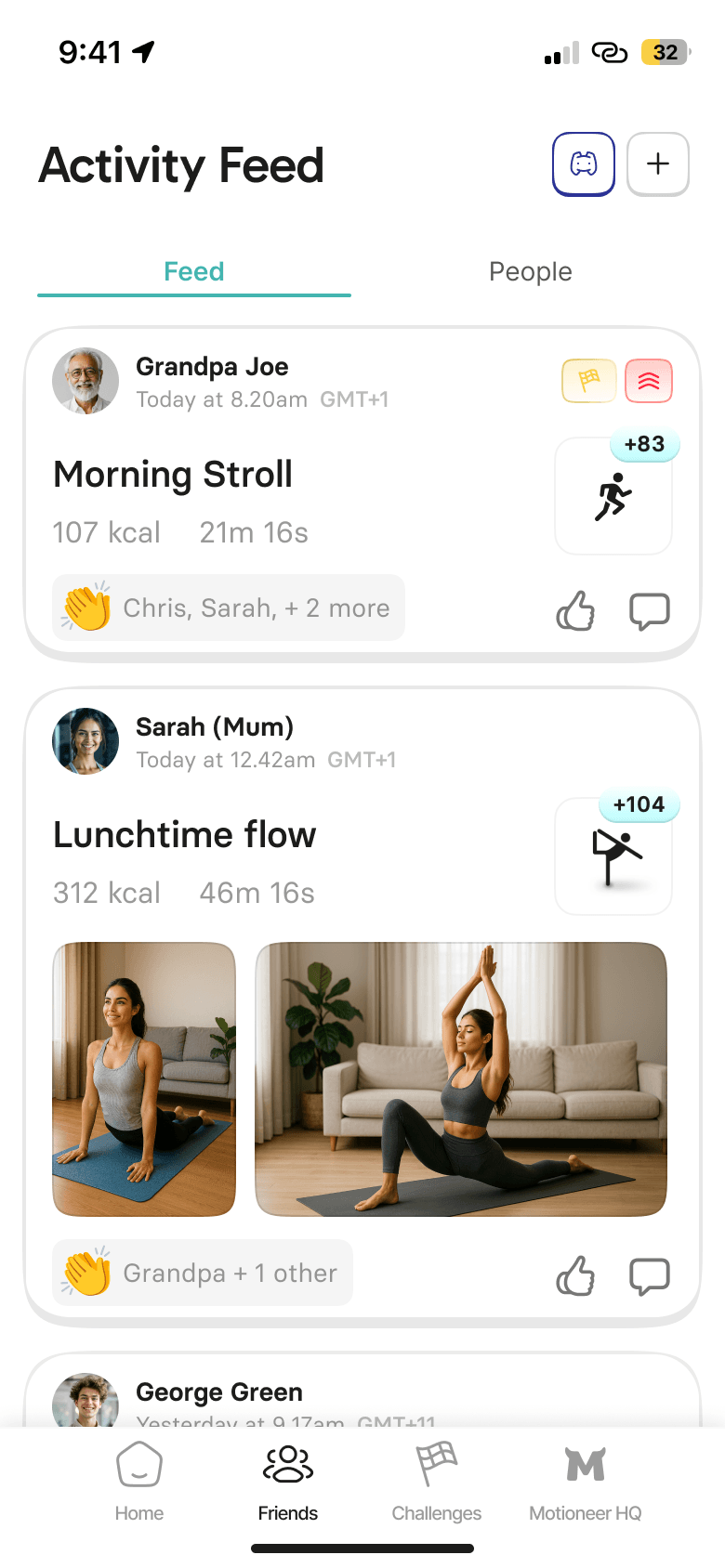
Motion scores the percentage of your own goal you hit, not your absolute steps. In a mixed-ability group (couch-to-active beginners alongside daily runners), everyone has a real shot at the top of the leaderboard. The fittest person doesn't auto-win.
No-punishment Motmot pets
Instead of leagues, medals and paid streak repair, Motion gives you a Motmot pet that you nurture by moving. No lost streaks you have to pay to fix: just gentle, encouraging momentum. See our take on digital fitness pets.
Built for women 40+, beginners and re-starters
Motion's community celebrates 500 steps as loudly as 50,000. If you or someone in your group is easily discouraged by direct competition, fun-first features like Get Fit Bingo keep it light. No money-staking, no rewards churn.
Pacer (Pacer Pedometer & Step Tracker) FAQs
If you have anything else you want to ask, reach out to us.
Is Pacer (Pacer Pedometer & Step Tracker) free?
Yes. Pacer is free to download and use, with a substantial free tier that includes automatic step tracking, adaptive daily goals, health logging and many challenges. Pacer Premium costs around $9.99/month (regional pricing varies, e.g. roughly €40/year) and unlocks the AI weight-loss coach, guided audio walks, virtual adventure challenges, deeper insights and an ad-free experience. A one-time 7-day free trial is offered, which converts to a paid plan. All figures are as of 2026 and vary by region and platform.
Can I do step challenges with friends on Pacer (Pacer Pedometer & Step Tracker)?
Yes. Pacer supports walking clubs, weekly leagues, global monthly challenges, virtual map-based adventure challenges, and team/workplace challenges via Pacer for Teams. One thing to know: rankings are based on absolute steps or distance (with a daily step cap, often around 30,000), so in a mixed-ability group the highest-volume mover tends to dominate the leaderboard.
How is Motion different from Pacer (Pacer Pedometer & Step Tracker)?
Motion scores effort rather than raw steps: it ranks people by the percentage of their own adaptive goal they hit, so a beginner can beat an athlete by being more consistent relative to their baseline. Pacer ranks by total steps or distance, which favors naturally high-volume movers. Motion also leans into gentle gamification (no-punishment Motmot pets and effort-scored weekly battles) rather than leaderboards, medals and paid streak repair. Pacer's strengths are its phone-only simplicity, weight-loss coaching and massive global community.
What's the best Pacer (Pacer Pedometer & Step Tracker) alternative?
For fair, encouraging group competition where the least-active person can still win, Motion is the better fit thanks to effort-based scoring. If you want everyone on one leaderboard regardless of which tracker they wear, Stridekick is worth a look. If you specifically want Apple Watch ring-closing contests, the Challenges app is an option. Pacer itself remains a great free phone-only step counter for solo walkers and weight-loss seekers.
Is Pacer accurate for counting steps?
Pacer is less accurate than a dedicated wearable: it relies on your phone's accelerometer, and at least one independent comparison (OutdoorGearLab) rated it the least accurate pedometer it tested.[6] It also requires you to carry your phone for steps to count. For more precise tracking you can connect a wearable: Pacer integrates with Apple Health, Google Fit, Samsung Health, Garmin and Fitbit. Motion likewise works with your phone, Apple Watch, Garmin and Fitbit.
Does Pacer make you bet or stake money to stay motivated?
No. Pacer does not use a money-staking or bet-your-cash gambling mechanic. Motivation comes from streaks, badges, leaderboards and community rather than wagering. Motion also avoids money-staking, using gentle gamification (Motmot pets, mini-games, effort-based battles) instead. If you specifically want loss-aversion accountability, that's the model used by apps like StepBet.
Related comparisons and features
Stridekick alternatives
Cross-device step challenges that put everyone on one leaderboard regardless of tracker. How it compares to Motion's effort-based scoring.
Read moreChallenges app alternatives
Apple Watch ring-closing competitions for families and workplaces, and how Motion handles mixed-ability groups differently.
Read moreStepBet alternatives
Money-staking step games versus Motion's no-stakes, effort-based motivation. Which accountability model actually fits you.
Read more
Your Fitness Journey Starts Here
Download Motion free and discover why this is the fitness app you'll actually keep using. Your future self (and your Motmot) will thank you.

