
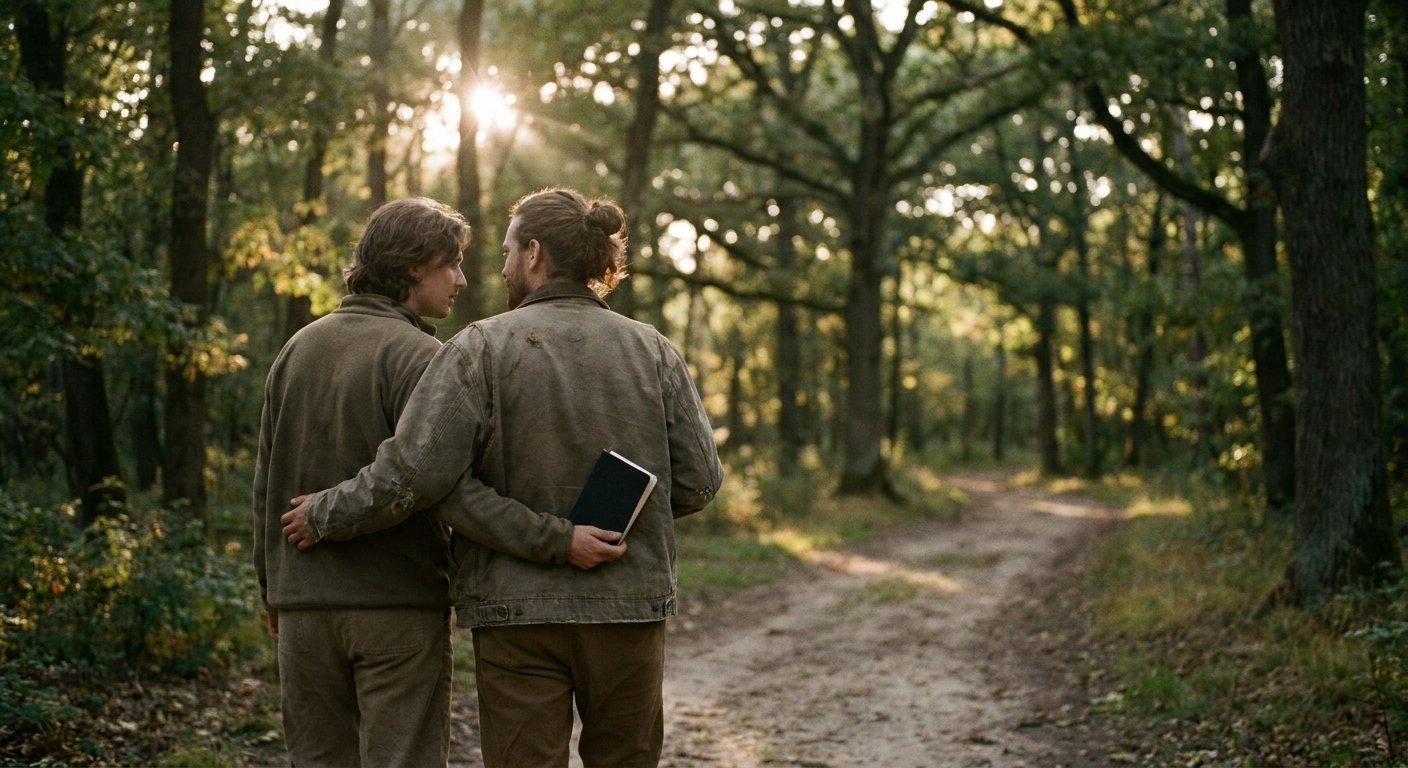
Walk-and-talk therapy has been practiced informally for decades. Freud was said to prefer walking consultations. Therapists have written about it since at least the 1990s. But until 2025, no randomized controlled trial had been designed to test it directly.
That changed with a pilot RCT published in Clinical Psychology & Psychotherapy, which compared walk-and-talk therapy directly against conventional indoor therapy for men with low mood.[1] It's an important study. It's also a small one. What it tells us, and what it can't yet tell us, is worth understanding carefully if you're a clinician, a patient considering whether to raise this with your therapist, or simply someone trying to evaluate the evidence honestly.
What walk-and-talk therapy actually is (and isn't)
Walk-and-talk therapy is a clinical modality in which a licensed therapist conducts a psychotherapy session while walking outdoors with the client. Sessions typically run 45 to 60 minutes and follow the same therapeutic structure as indoor sessions: the therapist uses their training, whether that's cognitive behavioral therapy, person-centered therapy, or another evidence-based approach, while the physical setting changes.
Settings vary. Many practitioners use a local park or quiet walking trail agreed on with the client. Some use a therapy garden or private outdoor space. The key features are consistent: it's a one-on-one professional relationship, it's paid, it follows treatment goals, and the practitioner holds the same ethical and clinical duties as in any other therapeutic context.
It is not peer-led walking for wellbeing, life-coaching walks, a group exercise session, or an informal walk with a friend who happens to listen well. These activities may all have value, but they are categorically different things. Conflating them with licensed walk-and-talk therapy is one of the more common sources of confusion in this area.
The format appears in multiple guises: "outdoor therapy," "walking therapy," "green therapy," and "ecotherapy" are all terms that appear in the literature, sometimes interchangeably and sometimes with real distinctions in emphasis. For the purposes of this post, walk-and-talk therapy refers to one-on-one licensed psychotherapy conducted while walking outdoors.
Why walk-and-talk therapy might suit some men: the evidence on side-by-side conversation
The geometry of a therapy session matters more than it might appear. Sitting face-to-face across a desk or sofa carries social signals that some clients find difficult: sustained eye contact, a formal setting, and a dynamic that can feel exposing in ways that are hard to articulate.
Survey research published in 2025 by Greene King and Macmillan Cancer Support found that 52% of men report feeling more comfortable discussing personal issues when they're side-by-side, whether walking, in a car, or at a shared activity.[2] A separate finding from the same survey was that 36% of men specifically said that a side-by-side orientation helps because they can look away if they become emotional. This is survey data from a commercial research context, not a clinical trial, and should be read accordingly. But it points to something that the qualitative therapy literature has described for years: the shoulder-to-shoulder arrangement changes what some people feel able to say.
This observation is consistent with a substantial body of research on masculine norms and help-seeking barriers. Möller-Leimkühler's foundational 2002 review of the clinical and sociocultural literature on men and depression noted that traditional masculinity norms make help-seeking more difficult specifically through the inhibition of emotional expressiveness, the association of help-seeking with loss of status and autonomy, and the masking of depressive symptoms behind more socially acceptable expressions such as irritability or withdrawal.[3] A 2024 systematic review on why young men don't seek help for affective mental health issues found that adherence to traditional masculinity remained the most consistently reported barrier across all 12 studies examined, with participants describing help-seeking as contradicting ideals of self-reliance and emotional stoicism.[4]
Research consistently finds that some men describe the traditional sit-down therapy setting as a barrier in itself. The format signals vulnerability before a word has been spoken. Walk-and-talk therapy changes some of those signals. Whether that translates into better clinical outcomes is a different and more difficult question, and it's one the 2025 pilot RCT begins to address.
The Dickmeyer 2025 randomized pilot study: what it found and what it can't claim
The first dedicated randomized controlled trial of walk-and-talk therapy was published in January 2025 in Clinical Psychology & Psychotherapy.[1] It enrolled 37 men with low mood (mean PHQ-9 score 11.4, placing them in the mild-to-moderate range), with a mean age of 44.1 years. Participants were randomized to either walk-and-talk therapy or conventional indoor therapy over a 6-week protocol, with weekly 60-minute sessions.
Both arms showed meaningful reductions in depression scores: approximately 36% reduction from baseline in each group. The between-group effect size for depression specifically was negligible (d = -0.02), meaning this small pilot found no detectable difference between the two formats on that primary outcome. That is not a finding that one format is better than the other. It is a finding that, in this sample, both were associated with similar improvements in depressive symptoms.
The picture was more nuanced on secondary outcomes. Walk-and-talk participants showed greater improvements in overall psychological distress (d = -0.5), anxiety (d = -0.4), and stress (d = -0.7). Indoor therapy participants showed better outcomes on measures of masculine-type depression, which covers externalizing symptoms like substance use and aggression (d = 0.6).[1] Feasibility benchmarks were strong: 89% of participants completed the post-intervention assessment, attendance was 91% in the walk-and-talk arm and 89% in the indoor arm, and satisfaction ratings were high in both conditions.
The limitations the authors named are worth stating directly. The sample was small (n=37), the follow-up period was short, sessions took place in favorable weather on a quiet campus setting, and the study could not isolate which elements of the walk-and-talk condition were doing what. It's not possible to say from this study whether the benefit came from the walking, the outdoor setting, the nature exposure, the side-by-side format, or some combination. The authors explicitly called for a powered trial to investigate these effects further.[1]
"First dedicated RCT" does not mean "well-established treatment." It means the evidentiary process has begun properly. This is promising, not conclusive.
What the broader walk-and-talk research base looks like
Before Dickmeyer 2025, the evidence on walk-and-talk therapy was largely qualitative. That evidence is genuinely informative, even if it carries different weight than controlled trials.
A 2025 qualitative study published in Counselling and Psychotherapy Research examined the experiences of psychotherapists delivering walk-and-talk sessions in a clinical outpatient context.[5] Seven semi-structured interviews were conducted with therapists at a German clinic for psychosomatic medicine and psychotherapy. The researchers identified two main challenges: the lack of a controlled, contained environment and concerns about privacy and confidentiality in outdoor settings. The two main advantages were an experience of deeper connection between therapist and client, and the role of physical movement in the therapeutic process. The therapists' overall assessment was positive, and most reported that the advantages outweighed the challenges.
Revell and McLeod's qualitative synthesis on walking and talking for wellbeing, most recently updated in 2024 and published in Counselling and Psychotherapy Research, represents the most comprehensive review of the qualitative evidence base.[6] The synthesis found consistent themes across studies: clients reporting increased openness, the side-by-side format reducing the power differential that some find difficult in conventional therapy, nature as a co-therapeutic element, and the physical rhythm of walking as a facilitator of emotional processing.
The APA Monitor on Psychology's October 2025 feature on integrating walking therapy into practice noted that feasibility studies across several patient groups have found walk-and-talk to be acceptable and to offer benefits for anxiety, depression, and post-traumatic stress symptoms, while also noting that the evidence base remains in early development.[7]
The honest characterization of the current evidence is this: the qualitative evidence is consistent and points toward genuine benefits for the right clients in the right contexts. The quantitative evidence is at an early stage. One small pilot RCT exists. The broader exercise-and-depression literature provides relevant context: a 2024 network meta-analysis of 218 randomized trials found that walking and jogging produced a Hedges' g of -0.63 on depression outcomes, which is a moderate-to-large effect,[8] but that literature examines exercise as an intervention rather than walking-as-therapy-delivery-format. The two are related but distinct questions.
What walk-and-talk therapy can't replace
This is worth stating without hedging, because walk-and-talk therapy is a clinical modality choice, not a treatment category.
For severe depression, active suicidal ideation, or acute mental health crisis, the appropriate setting is qualified clinical care, which may include medication management, specialist psychiatric input, or inpatient support depending on presentation. Walk-and-talk therapy is not an appropriate primary intervention in these contexts.
For trauma, specialist trauma-focused therapies, including EMDR (eye movement desensitization and reprocessing), prolonged exposure therapy, and trauma-focused CBT, have an established evidence base for specific trauma presentations. These modalities have specific protocols and requirements. A therapist can sometimes deliver certain approaches in a walk-and-talk format, but the format does not substitute for the approach.
Walk-and-talk therapy is a delivery format that a licensed therapist may offer alongside, or instead of, conventional indoor sessions. It is not a distinct therapeutic approach with its own treatment protocols. Someone who needs medication should not be told that walking therapy replaces a conversation with a prescribing clinician. Someone who needs a structured trauma protocol should be receiving that protocol from a suitably qualified specialist.
If you are currently in treatment and considering raising walk-and-talk therapy with your clinician, the right framing is exactly that: raising it with your clinician, not as a replacement, but as a question about format.
Walk-and-talk therapy vs men's walking groups: the difference matters
These are two different things serving different purposes, and the distinction is frequently blurred in popular coverage.
Walk-and-talk therapy is one-on-one, with a licensed therapist, paid, time-limited, and follows specific treatment goals set within a therapeutic relationship. The therapist has professional obligations under their regulatory body. The session is confidential. The conversation is structured around your mental health, even if the setting is a park.
Men's walking groups are peer-led, free or low-cost, ongoing, open-access, and make no clinical claim. They offer social connection, accountability, and the benefits of regular outdoor exercise with other people. The evidence on their impact on wellbeing and loneliness is reasonable and growing. But a walk with a group of people you've met through a local running club is not therapy, and it wouldn't be appropriate to describe it as such.
Both can be valuable. They address different needs and serve different purposes. Someone in walk-and-talk therapy might also attend a men's walking group on other days. Someone who tried therapy and didn't find it helpful might find a peer-led group more accessible. These aren't competing options.
If peer-led walking is what you're actually looking for, rather than clinical therapy, how to start a men's walking group covers the practical steps in detail.
How to find a walk-and-talk therapist
The most important step is verifying credentials. Walk-and-talk therapy should be delivered by a licensed or registered therapist. The relevant credential depends on where you are.
In the UK, the British Association for Counselling and Psychotherapy (BACP) and the British Association for Behavioural & Cognitive Psychotherapies (BABCP) maintain registers of qualified practitioners. The Health and Care Professions Council (HCPC) regulates psychologists. A therapist advertising walk-and-talk sessions should be verifiable against one of these registers. Membership of the register is the floor, not a guarantee of quality, but it confirms basic training and ethical accountability.
In the US, the relevant credential is typically a state-licensed psychologist, licensed clinical social worker (LCSW), licensed professional counselor (LPC), or licensed marriage and family therapist (LMFT). State licensing boards maintain public registries. Therapist directories may filter by these credentials, but always verify the license independently through your state's board.
In Canada, regulated health professions vary by province. Provincial colleges of psychologists or social workers are the authoritative starting point.
When you've identified a therapist who advertises outdoor or walk-and-talk sessions, it's reasonable to ask what training they've done in outdoor therapy, what happens if weather prevents the session, how confidentiality is managed in a public outdoor setting, and whether the format is appropriate given your current presentation. A competent therapist should be able to answer these questions directly.
Insurance coverage for walk-and-talk therapy varies considerably. In many jurisdictions, insurers reimburse based on the therapeutic approach (CBT, psychodynamic, and so on) and the therapist's license, not on the setting. Worth verifying with your insurer before assuming coverage.
How Motion fits in: not therapy, but supporting consistency between sessions
Motion is not therapy and makes no therapeutic claims. For someone in walk-and-talk therapy, or any therapy that involves regular walking, Motion's function is different and more limited: supporting consistent movement on the days between sessions.
The effort-based goals adjust to your actual activity level week by week, which matters on difficult weeks when showing up for a walk at all is the achievement. Activity Battles create a lightweight accountability layer with friends, scored on percentage of personal goal rather than raw steps, so there's no comparison pressure regardless of fitness level. The Discord community provides a non-clinical, peer-based space where movement is celebrated without judgment. None of this is therapy. It's infrastructure for staying active between the sessions that actually are.
If you're curious whether consistent daily walking might be a reasonable complement to whatever mental health support you're currently receiving, that's a conversation worth having with your clinician.
Where the evidence on walk-and-talk therapy stands
Walk-and-talk therapy has crossed an evidentiary threshold. It has a randomized pilot trial. It has a growing body of qualitative evidence. It has an expanding community of licensed practitioners. What it doesn't yet have is the kind of replicated, powered trial evidence that would make strong efficacy claims appropriate.
For a sceptical reader, the intellectually honest position is this: the evidence is suggestive and the theoretical rationale is coherent, but the quantitative basis remains limited. If you're a clinician, this is a modality worth tracking. If you're a potential client, it's worth asking your therapist about if the format appeals to you. Not as a better option, but as a different one that might suit you better.
The research is moving. Dickmeyer and colleagues explicitly called for a powered trial. Others are likely to follow. The evidence base for walk-and-talk therapy in 2025 is early but no longer absent.
If you're struggling right now:
- US: 988 Suicide & Crisis Lifeline: call or text 988 at 988lifeline.org
- UK: Samaritans: call 116 123 (free, 24/7) at samaritans.org
- UK (men-focused): CALM: call 0800 58 58 58 (5pm to midnight) at thecalmzone.net
Sources
- Dickmeyer et al. (2025). Walk-and-Talk Therapy Versus Conventional Indoor Therapy for Men With Low Mood: A Randomised Pilot Study. Clinical Psychology & Psychotherapy.
- Greene King × Macmillan Cancer Support (2025). Shoulder to Shoulder: research on men and difficult conversations.
- Möller-Leimkühler AM (2002). Barriers to help-seeking by men: a review of sociocultural and clinical literature with particular reference to depression. Journal of Affective Disorders.
- Sheikh A et al. (2024). Why do young men not seek help for affective mental health issues? A systematic review of perceived barriers and facilitators among adolescent boys and young men. PMC.
- Pischel et al. (2025). They Talk the Talk and Walk the Walk: Psychotherapists' Experiences of Psychotherapy While Walking in Nature. Counselling and Psychotherapy Research.
- Prince-Llewellyn & Revell (2024/2025). Walking and talking for well-being: Exploring the effectiveness of walk and talk therapy. Counselling and Psychotherapy Research.
- APA Monitor on Psychology (October 2025). How to integrate walking therapy into your practice.
- Noetel M et al. (2024). Effect of exercise for depression: systematic review and network meta-analysis of randomised controlled trials. BMJ / PMC.


